 The Cocktail Crafter
If you’re looking for an Amaretto Mai Tai without orgeat, this is a version that keeps the structure of a classic Mai Tai while making it much easier to build at home. By using amaretto instead of orgeat, you still get that almond note alongside rum, lime, and orange liqueur, just in a slightly sweeter and more rounded way.
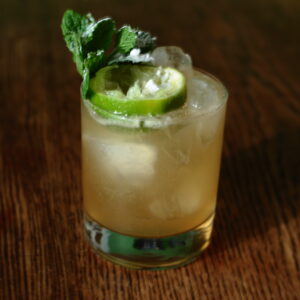
Amaretto Mai Tai
Equipment
- 1 Cocktail shaker
- 1 Hawthorne strainer
- 1 Jigger
- 1 Bar spoon
- 1 Fine mesh strainer (optional) Used when you’re adding powdered sugar as a garnish, to dust it evenly and avoid clumps
Ingredients
- 50 ml aged rum
- 15 ml amaretto
- 15 ml Cointreau or any triple sec
- 25 ml fresh lime juice
- 5 ml demerara Sugar Syrup (Optional) adds a bit of extra sweetness to the drink if needed
- Mint bouquet
- Spent lime shell
- Powdered sugar light dusting
Instructions
- Start by chilling a rocks glass with water and ice, or in the freezer.
- Add rum, amaretto, Cointreau, and lime juice to a cocktail shaker.
- Add ice and shake for 10–15 seconds.
- Drain excess meltwater from the glass, keeping the ice in place. Top up with fresh ice if needed.
- Strain into the glass using a Hawthorne strainer.
- Slap the mint, then add it to the glass along with the lime shell.
- Lightly dust powdered sugar over the mint.
My Take
I really like amaretto, so this started as me wondering whether it could stand in for orgeat in a Mai Tai.
They both share an almond note, but amaretto brings in a slightly sweeter and rounder profile. I wasn’t expecting it to be a perfect substitution, I just wanted to see if it would land somewhere close.
And honestly, it got closer than I expected.
You still get the familiar combination of rum, lime, orange, and almond, just with more sweetness and a slightly softer edge. It ends up feeling like a Mai Tai I’d actually make on a random evening without having to think about sourcing orgeat.
How to Make an Amaretto Mai Tai (In Detail)
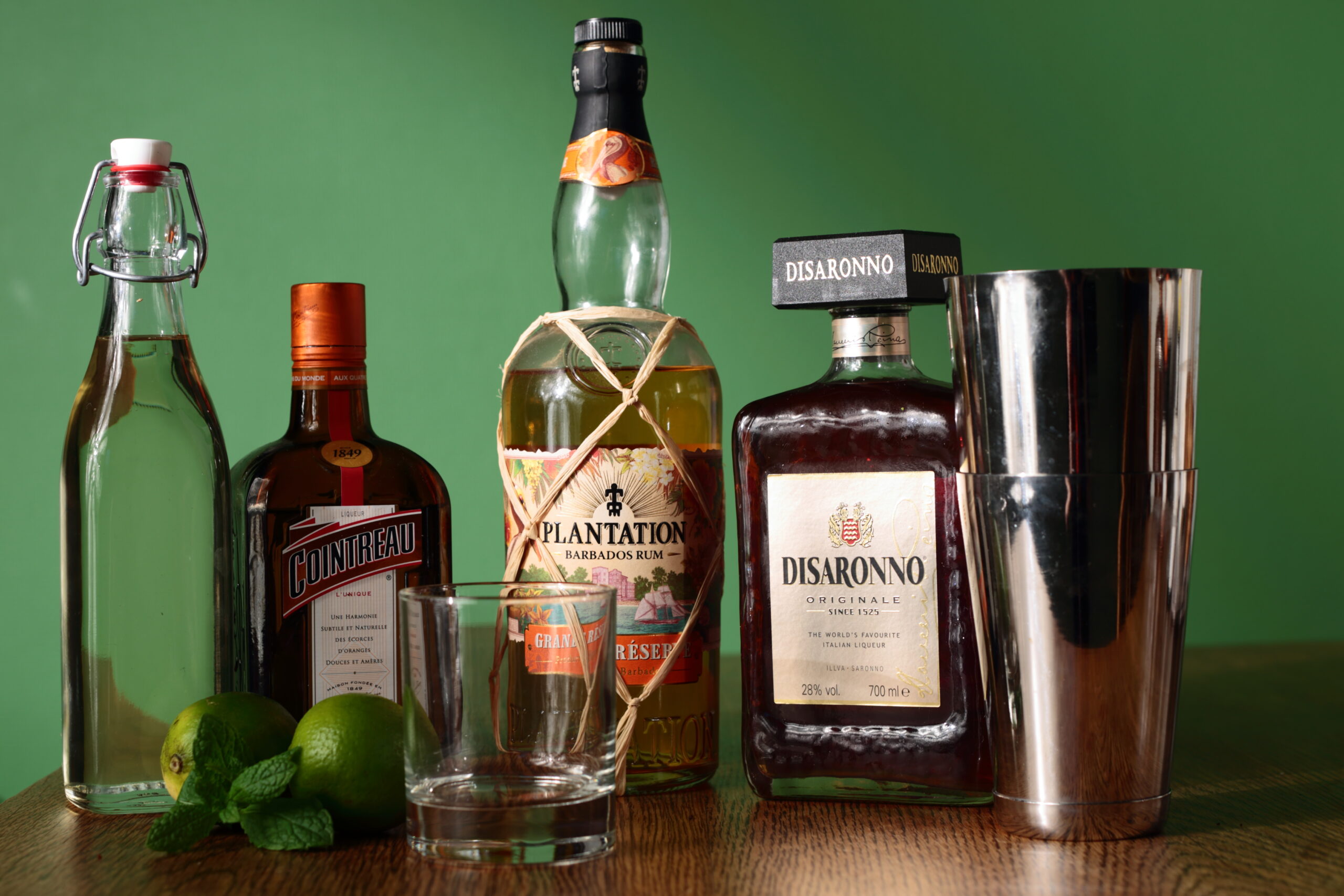
Start by chilling your glass. You can either use ice and water or just put it in the freezer. The goal is just to get it cold so you’re not warming the drink up when you pour it.
When it comes to shaking, you’re trying to chill the drink as much as possible while getting some air into it, without over-diluting it. It’s always a balance.
The colder your ingredients are to begin with, the easier that is to achieve. Just shake until the drink is properly chilled.
Ice doesn’t matter too much in the shaker, anything from your freezer will do. Where it does matter is in the glass. Use the best ice you have and fill the glass properly. More ice means less dilution over time.
Before straining, get rid of any melted water in the glass but keep the ice. If needed, top it up with fresh ice so you’re not starting off with a half-empty glass.
Strain into the glass using a Hawthorne strainer.
Balancing the Drink
This is a slightly sweeter take on a Mai Tai, so balance matters a bit more.
If it’s too sweet, the first thing to adjust is the lime. That said, not all limes are the same. Some are sweeter, some are very sharp. If your lime is already quite sour, adding more can throw things off quickly, so in that case it’s better to reduce the sweeter ingredients instead.
If it’s not sweet enough, a small amount of demerara syrup works well. It adds sweetness without pushing the almond or orange too far.
If the drink feels too strong, I’d slightly reduce the rum and add a bit more lime along with a touch of demerara syrup to bring it back into balance.
Rum Choice and Split Base Ideas
For this experiment I used my standard cocktail rum, which happens to be a bottle of Plantation rum.
In general, I prefer using two rums in a Mai Tai. Something lighter combined with something darker or a bit funkier tends to give a more interesting result. For example, a blended rum with a small amount of Jamaican rum can add some depth without taking over the drink.
With the added sweetness from the amaretto, I wouldn’t go too heavy on the funkier side, it can throw things out of balance pretty quickly.
Garnish
Mint is essential here. A Mai Tai without mint just feels wrong.
Slap the mint before adding it to release the oils, that’s what you actually smell when you take a sip.
The powdered sugar is something I picked up early on and stuck with. It looks good, but more importantly it adds a bit of sweetness on the nose before you even taste the drink.
A Bit of Mai Tai History
The original Mai Tai is often misunderstood today because what’s commonly served under the name has drifted far from its roots. At its core, a traditional Mai Tai is structurally simple: rum, lime, orange liqueur, and orgeat. The key idea is balance—strong rum, sharp citrus, subtle sweetness, and a distinct almond note from the orgeat.
The drink is most commonly attributed to Victor J. Bergeron, better known as Trader Vic, who first served it in 1944 at his Oakland restaurant. According to the most repeated account, he created it for visiting friends from Tahiti, who reportedly described it as “Maita’i roa a’e,” meaning “the best” or “out of this world,” which became the drink’s name.
Around the same period, tiki culture was also being shaped by figures like Ernest Raymond Beaumont Gantt, known as Don the Beachcomber. His approach to cocktails was more complex and layered, often using multiple rums and proprietary syrups, while Trader Vic’s Mai Tai leaned more toward a defined, repeatable structure. Together, these approaches helped establish what would become the foundation of modern tiki cocktails.
Over time, however, the Mai Tai evolved significantly in popular culture. As it spread through bars and hotels, it gradually accumulated additions like pineapple juice, orange juice, and grenadine. These variations became sweeter, more diluted, and closer to tropical punch than the original almond-forward cocktail.
This version takes a different approach. Instead of following the modern fruit-heavy adaptations, it stays closer to the original structural idea of a Mai Tai—rum, lime, orange, and almond—but replaces orgeat with amaretto. It is not intended as a historical replica, but as a practical reinterpretation of the original flavor logic. Amaretto provides a similar almond character, though sweeter and more rounded, which shifts the drink slightly away from the dry balance of orgeat while preserving the core identity of the cocktail.
In that sense, this is less about recreating a perfect Trader Vic Mai Tai and more about translating its underlying framework into something easier to build at home without losing the essential idea of the drink.
Final Thoughts
This is a strong drink, but it’s meant to be sipped slowly.
If you take your time with it, everything comes through properly. It’s slightly sweet, well rounded, and still very much in that Mai Tai space.
It’s simple enough that you’ll actually make it, which is probably the most important part.